Key takeaways
- 1
- We run 5 QC stages, ending with a final AQL 2.5 inspection and a packing check before cartons are sealed.
- 2
- AQL 2.5 is the most common level for consumer goods; QIMA's example of a 4,000-unit shipment inspects 200 pieces and rejects the batch at 11 defects.
- 3
- Report defects within 14 days of delivery and we remake or refund the defective pieces at our cost, including shipping.
An apparel quality control checklist covers five moments: fabric when it arrives, sewing while it's happening, measurements against your size chart, a final inspection of a random sample, and packing before cartons close. Problems are cheapest to fix at the start. A shade difference caught on a fabric roll costs nothing; the same fault found on 300 finished hoodies costs a remake. So a factory that only checks at the end is checking too late.
Below is what gets checked at each stage, how AQL works in plain words, a checklist table you can use with any supplier, what to ask for before you pay the balance, and how defects should be handled.
What does quality control mean for a clothing order?
Quality control is the set of checks that makes sure the bulk order matches your approved sample. That last part matters. QC doesn't judge whether your hoodie is "good" in the abstract. It compares every piece against a reference: the signed-off sample, your tech pack and your measurement chart.
That's why QC can only be as good as your paperwork. If the tech pack doesn't say where the print sits, nobody can fail a piece for a print that's 3 cm too low. The most common QC argument we see is about something that was never written down.
We run 5 stages on every order: Fabric inspection on arrival, inline checks during sewing, a measurement check against your spec, a final AQL 2.5 inspection, and a packing check before cartons are sealed.
What gets checked at each stage?
1. Fabric inspection on arrival. Before anything is cut, rolls are checked for weight (GSM), colour against the approved swatch, shade differences between rolls, holes, slubs, stains and width. Shrinkage is tested on a washed piece, because a fabric that shrinks after cutting ruins the whole size chart.
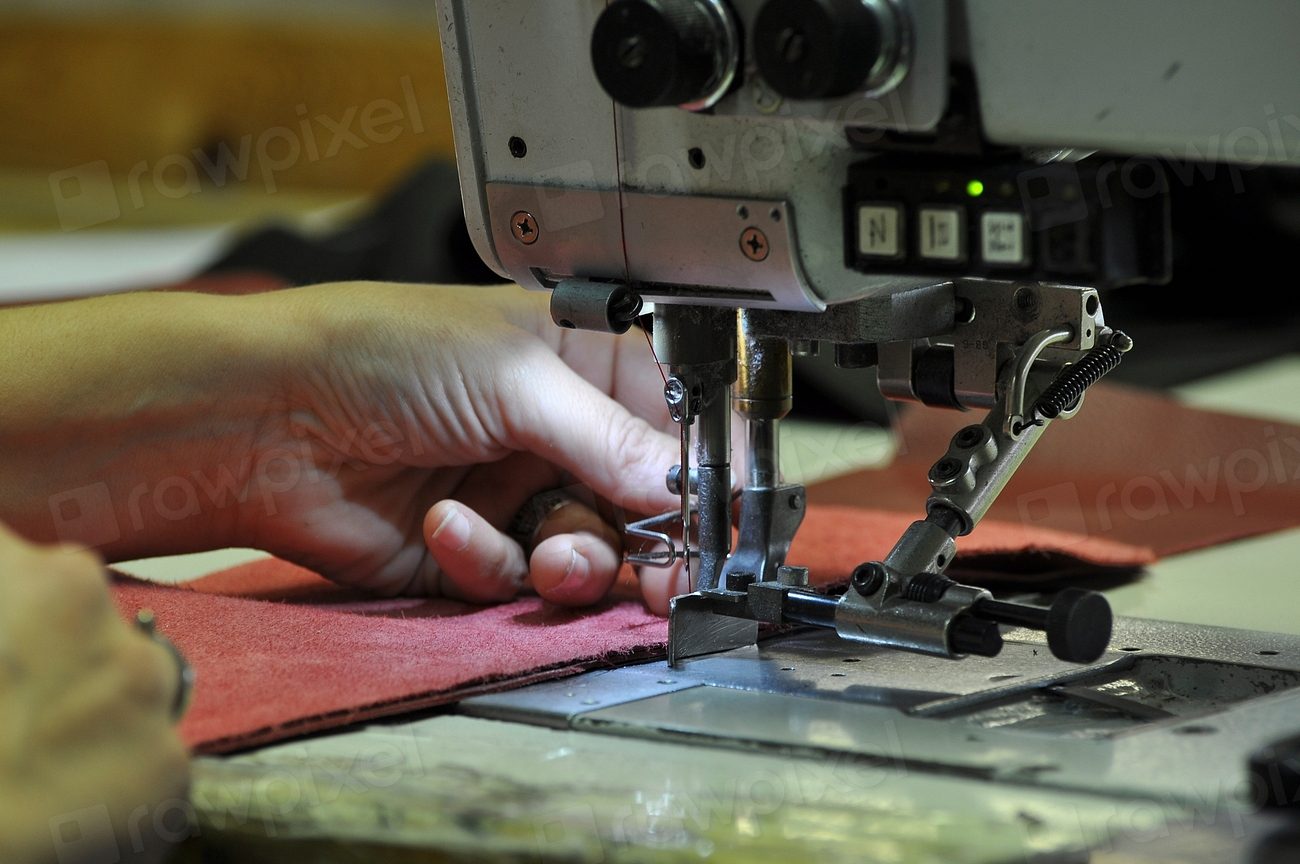
2. Inline checks during sewing. Inspectors walk the line and pull pieces mid-production. They look at stitch density, seam strength, puckering, twisted side seams, skipped stitches and loose threads. Catching a machine that's set wrong after twenty pieces is far better than finding it after two hundred.
3. Measurement check against your spec. Finished pieces from each size are laid flat and measured point by point: chest, length, sleeve, hem, hood height. Our tolerance is ±1–1.5 cm on each point. This is also where grading mistakes show up, like a 2XL that's barely bigger than an XL. If you're doing oversized fits, our guide to oversized fit measurements and grading explains what to specify.
4. Final AQL inspection. When the order is finished, a random sample is pulled and inspected fully: appearance, measurements, print or embroidery, labels, trims, function (zips, drawcords, snaps). Ours is AQL 2.5, explained below.
5. Packing check. Folding, poly bags, size stickers, hang tags, carton counts, carton labels and the packing list. Wrong-size bags inside right-size cartons is a classic, and it's a nightmare to sort out in your warehouse.
AQL explained simply
AQL stands for acceptable quality limit. It comes from a family of sampling standards: as the NIST engineering statistics handbook explains, the US military's MIL-STD-105D became ANSI Z1.4 and then ISO 2859, and the AQL is the foundation of all of them.
The idea is practical. Checking every single piece in a big order is slow and still misses things, because people get tired. So the inspector checks a random sample, and a standard table says how big that sample must be for your order size and how many defects are allowed before the whole batch fails.
Here's a real example from QIMA's AQL guide: a shipment of 4,000 units inspected at General Inspection Level II gets code letter L. At AQL 2.5 that means inspecting 200 units. Ten or fewer defective units and the batch passes. Eleven or more and it's rejected. Smaller orders use smaller samples from the same table.
Defects are sorted into three types:
- Critical: a safety or compliance failure, like a needle fragment or a loose part on kidswear. The allowance is typically zero.
- Major: something a customer would return. A hole, a misprinted logo, a broken zip, a wrong size label.
- Minor: a small cosmetic issue that doesn't stop the garment being sold or worn, like a short loose thread.
QIMA describes AQL 2.5 as the most common standard for general consumer goods, with 4.0 used where minor cosmetic defects are acceptable. For a streetwear brand, AQL 2.5 on major defects is a sensible default. Asking for a tighter level is possible, but it means bigger samples and more inspection time.
One thing AQL is not: a promise that every piece is perfect. It's a statistical check on the batch. That's why a clear defect policy (below) matters as much as the inspection level.
The apparel quality control checklist
Use this with any supplier. Ask them to confirm each line, and ask for proof where it says so.
| Stage | What to check | What to ask for |
|---|---|---|
| Fabric | GSM, colour vs approved swatch, shade between rolls, shrinkage, holes and stains | Swatch photo next to your approved swatch, GSM reading |
| Cutting | Grain direction, pattern matches approved sample, pieces bundled by size | A quick photo of cut panels for a size |
| Sewing (inline) | Stitch density, seam strength, puckering, twisted seams, skipped stitches | A mid-production update with photos |
| Decoration | Print or embroidery position, size, colour, cure, no cracking on stretch | Close-up photo next to a ruler |
| Measurements | Every point on the size chart, each size, within tolerance | Measurement sheet with actual readings |
| Trims and labels | Correct neck label, care label, size label, hang tags, zips and drawcords work | Close-ups of labels in each size |
| Final inspection | AQL level, sample size, defects found by type, pass or fail | The inspection report |
| Packing | Folding, bags, size stickers, carton count, carton labels, packing list | Photos of open and sealed cartons, packing list |
| Quantity | Total per size and colour against the order | Final count per size |
Keep in mind that quantities can move slightly. Ours is within ±3% of the ordered quantity, which is normal in garment production because of cutting and defect allowances.
What photos and video should you ask for?
You can't stand on the factory floor, so the photos are your inspection. Be specific, because "send some photos" gets you three flattering shots of the best pieces.
Ask for:
- A flat lay of each size with a measuring tape across the chest and down the length.
- Close-ups of the print or embroidery, the neck label, the care label and one seam inside out.
- Random pieces, not chosen ones. Ask for pieces pulled from different cartons or bundles.
- A short video of the inspector handling a few pieces: turning them inside out, stretching the print, pulling a zip.
- The inspection result, with sample size and the number of defects found.
- Carton photos, open and sealed, showing the labels.
We send updates twice a week, with photos during production, and the balance is due after final QC photos, so you see the finished goods before your money moves. Our deposit and payment terms guide explains how that sequence protects you. Final inspection, packing and carton labelling take us 3–5 days.
For larger orders, or if you're nervous about a new supplier, paying an independent inspector for the final check is a reasonable spend. For a first run of 100 to 300 pieces, clear photos, video and a written defect policy usually do the job.
What is a fair defects policy?
Even with good QC, a few pieces may arrive with problems. What matters is what happens next. A fair policy answers three questions in writing, before you pay the deposit:
- How long do you have to report? Ours is 14 days from delivery.
- What proof is needed? Usually clear photos of each faulty piece and the carton label it came from.
- Who pays? With us, we remake or refund the defective pieces at our cost, including shipping.
What isn't a defect matters too. Something that matches the approved sample isn't a defect, even if you've changed your mind about it. Measurements inside the agreed tolerance aren't defects. That's why signing off a sample properly, and writing tolerances into your tech pack, saves arguments later. Our questions to ask a clothing manufacturer guide lists the defect questions to raise before you commit.
When your shipment lands, open a few cartons straight away and check against the same checklist. Don't wait until week three of selling to find a size label problem.
How to set your order up for good QC
Most QC failures start before production. Three things help most:
- A complete tech pack with measurements, tolerances, print placement and label positions. Our tech pack template is a good starting point.
- An approved sample you keep. Label it, keep it, and refer to it. It's the reference the inspector uses.
- Agreed photos before balance. Put the photo list above in your first email, so it's part of the deal, not a favour.
You can see where QC sits in the full timeline on how it works. If you'd like us to make your next run, send your tech pack and quantities through get a quote and we'll confirm our QC steps on the quote.